

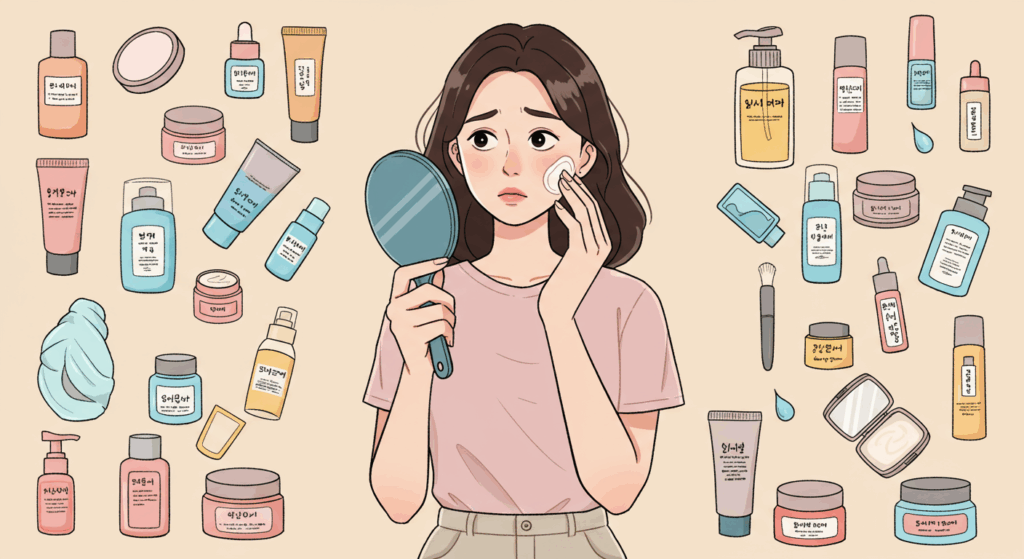
The hottest buzzword in the 2025 K-beauty market is “slow aging.” While beauty trends change quickly, the desire to maintain healthy skin for a long time remains the same. The MZ generation, in particular, is paying close attention to slow aging. Let’s dive into everything you need to know about this trend
What Is Slow Aging? The Core of the 2025 K-Beauty Trend
Slow aging means, quite literally, “aging slowly.” It’s not about simply stopping aging, but about managing your skin so it can age healthily. While traditional anti-aging focused on “preventing aging,” slow aging is all about embracing a “healthy aging process.”
The reason slow aging has become a key trend in the 2025 K-beauty market is closely linked to a shift in the values of the MZ generation. This younger generation is moving away from the idea of preserving youth at all costs and is instead seeking a healthy and natural beauty that fits their age.
Slow aging focuses on long-term skin health rather than short-term results. Ingredients and products that strengthen the skin’s natural functions are getting a lot of attention. Key concepts include strengthening the skin barrier, promoting cell regeneration, and maintaining moisture balance.
Why the Korean MZ Generation Is Focused on Slow Aging
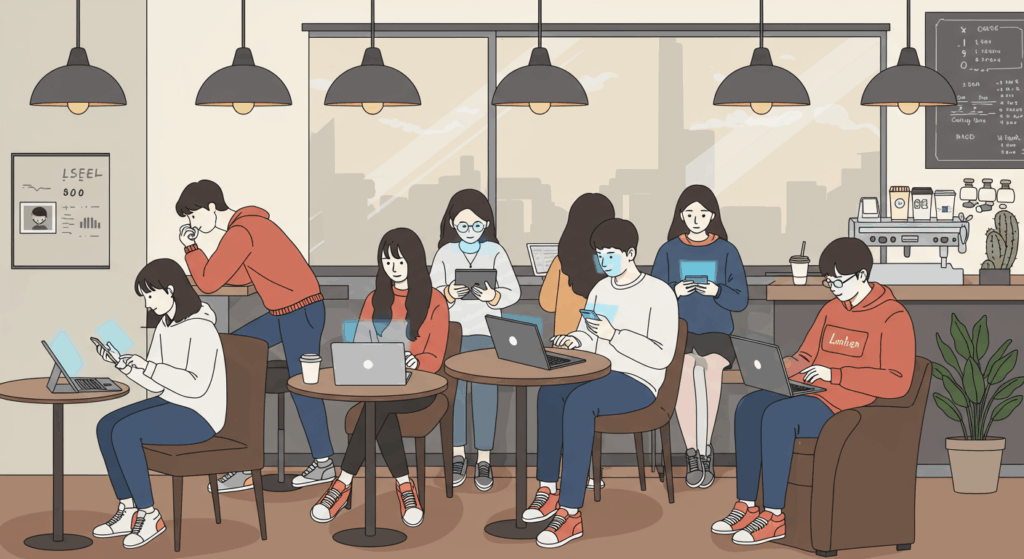
The Korean MZ generation’s interest in slow aging is driven by several factors.
First, increased exposure to digital devices has led to accelerated skin aging from blue light and environmental pollution. There’s growing research that shows a rise in premature aging symptoms among people in their early 20s.
Second, the MZ generation has high information literacy and a deep understanding of ingredients. They are smart consumers who scrutinize ingredient lists and ratings (like EWG) rather than being swayed by marketing. They prioritize long-term skin health over instant effects.
Third, social media has brought a new beauty standard to the forefront: “natural beauty without filters.” Healthy and radiant skin is now highly valued, and slow-aging products that help achieve this look are gaining popularity.
Finally, a growing focus on well-being and a culture of self-care, along with increased economic freedom, has made investing in personal wellness more common. Slow aging is becoming more than just a beauty trend; it’s a part of a lifestyle.
Slow-Aging Key Ingredients and Product Selection Guide
The secret to successful slow aging lies in choosing effective ingredients. Peptides are a prime example. They are excellent for promoting collagen production and improving skin elasticity. Signal peptides, in particular, send “youth signals” to skin cells to stimulate collagen synthesis.
The panthenol and peptide double formula is a popular combination for strengthening the skin barrier. Panthenol (provitamin B5) offers excellent moisturizing and soothing benefits, and when paired with peptides, it can effectively repair a damaged skin barrier.
Recently, cell-centric solutions inspired by longevity research are also trending. Ingredients like niacinamide, which activates cell energy, and EGF, which helps cell regeneration, are gaining attention.
Products utilizing medical-grade ingredients are also popular. PDRN (polydeoxyribonucleotide) was originally a medical ingredient but has been incorporated into cosmetics. It’s effective for repairing damaged skin due to its cell regeneration and anti-inflammatory properties. Exosomes, derived from stem cells, are also renowned for their exceptional skin-regenerating abilities.
| Ingredient | Benefit | Suitable for |
| Peptides | Promotes collagen production, improves elasticity | All skin types |
| Panthenol | Moisturizes, soothes, strengthens barrier | Sensitive, dry skin |
| Niacinamide | Brightens, improves pores, activates cell energy | Oily, combination skin |
| PDRN | Cell regeneration, anti-inflammatory | Damaged, sensitive skin |
| Exosomes | Skin regeneration, wound healing | Aging, troubled skin |
When selecting products, the ingredient concentration and formula are also important. Make sure the active ingredient content is sufficient and the formula matches your skin type. Also, when layering multiple products, consider how the ingredients will interact.
Age-Specific Slow-Aging Strategies
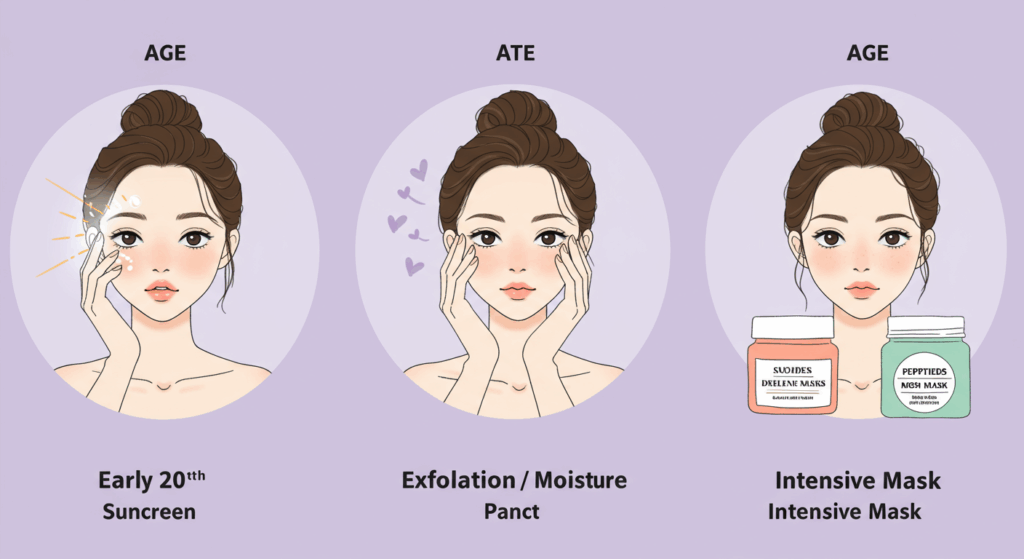
Slow aging requires a different approach for each age group. For those in their early 20s, prevention is key. It’s crucial to protect your skin from the external environment with sunscreen and antioxidant-rich products. Antioxidants like Vitamin C serum or green tea extract can help prevent skin damage.
From your late 20s onwards, you need a strategy to address the first signs of aging. At this stage, your skin’s turnover cycle begins to slow down. Focus on gentle exfoliation and invest in moisturizing ingredients like hyaluronic acid and ceramides. It’s also a good time to start incorporating low-concentration retinol to help your skin adapt.
The 30s are the time to establish a serious slow-aging routine. Use peptide products to boost collagen production, along with serums rich in antioxidants. It’s also a good idea to use a face mask or ampoule once or twice a week for intensive care.
| Age Group | Main Focus | Recommended Ingredients | Recommended Product Type |
| Early 20s | Sun protection, antioxidants | Vitamin C, green tea extract | Sunscreen, lightweight serum |
| Late 20s | Hydration, turnover promotion | Hyaluronic acid, AHA/BHA | Toner, essence, low-concentration retinol |
| 30s | Elasticity, intensive care | Peptides, niacinamide | Serum, cream, ampoule |
Regardless of your age, the most important thing is not to overdo it. Using too many products at once can weaken your skin barrier. The core of slow aging is to observe your skin and select only the products you truly need.
The Synergy of Cosmetic Procedures and Slow Aging
Cosmetic procedures are becoming commonplace among Gen Z. While procedures were once mostly sought after by people in their 30s and 40s, they are now becoming mainstream for people in their early 20s as a form of “preventive procedure.” What’s noteworthy is that interest in “post-procedure care” has increased by 0.8% compared to the previous year.
After a cosmetic procedure, your skin is temporarily more sensitive, so it’s important to choose gentle products that aid in recovery. Immediately after a procedure, use products with soothing ingredients like ceramides or panthenol to strengthen the skin barrier. Avoid harsh ingredients (like retinol, AHA/BHA) until your skin has fully recovered.
Your at-home care strategy should also change depending on the type of procedure. Peptide products that maintain skin elasticity are effective after filler treatments, while moisturizing products are best after Botox. For skin booster procedures, hyaluronic acid products can help prolong the effects.
The combination of slow aging and cosmetic procedures is evolving to pursue sustainable beauty beyond temporary results. The strategy of getting immediate improvements from a procedure and then maintaining that effect for a long time with slow-aging products is gaining popularity.
The Complete Guide to Your Daily Slow-Aging Routine
In Korea’s hot and humid climate, it’s important to choose products with a lightweight texture. Rather than layering many products, it’s better to use a few effective, lightweight ones. Especially in the summer, oil-free or gel-type products are great as they allow your skin to breathe.
Keep your morning routine simple: cleanse, apply an antioxidant serum, a lightweight moisturizer, and finish with sunscreen. Your evening routine should be more focused. After cleansing, use an exfoliator (2-3 times a week), toner, essence, serum, and cream. Once or twice a week, you can add a sheet mask for intensive care.
Your routine should also change with the seasons. In the spring, focus on cleansing and strengthening the skin barrier to protect against fine dust. In the summer, concentrate on sun protection and soothing care. In the fall, amp up your hydration to prepare for dryness, and in the winter, focus on rich nourishment.
Slow aging is also expanding beyond skincare to haircare and nutritional supplements. Your scalp is part of your skin, so try using shampoos and scalp serums with antioxidant ingredients. Taking supplements with collagen, hyaluronic acid, or antioxidants can help you care for your skin from the inside out.
Slow-Aging Tips and Precautions
As product quality has become more consistent, smart selection criteria have become even more important. Instead of being swayed by flashy marketing, carefully check the ingredient list. Pay attention to the concentration and order of active ingredients; the earlier an ingredient appears on the list, the higher its concentration.
Using too many products can actually weaken your skin barrier. Embracing “skincare minimalism”—using only the products you truly need—is essential. Be mindful of active ingredients (retinol, AHA/BHA, Vitamin C) and consider using them at different times, like morning and night, to avoid irritation.
Choosing ingredients tailored to your skin type is also crucial. For dry skin, opt for moisturizing ingredients like ceramides or squalane. For oily skin, choose ingredients like niacinamide or tea tree oil. When starting a new product, always perform a patch test first to ensure there’s no adverse reaction.
Slow aging is, by its very nature, a “slow” process. Differentiate between short-term strategies (immediate hydration, soothing) and long-term strategies (promoting collagen production, cell regeneration). Consistency is key, so the most important thing is to establish and stick with a sustainable routine.
The Future of Slow Aging in 2025
In 2025, the slow-aging trend is expected to merge with a new trend called “neuro-glow.” This concept uses neuroscience to focus on the connection between the skin and the brain. Products that research and care for the effects of stress hormones on the skin will be released.
As consumers become more discerning, brands’ strategies are also changing. The “clean beauty” trend will be strengthened, going beyond simply “no additives” or “hypoallergenic” to transparently disclosing the origin and manufacturing process of ingredients. Environmentally friendly packaging and sustainable sourcing will also become key purchasing factors.
Major brands in Korea and abroad are already preparing product lines tailored to slow aging. We will see more existing anti-aging lines being revamped or entirely new slow-aging-specific lines being launched. The growth of “cosmeceutical” brands that combine pharmaceutical technology with cosmetics is expected to be particularly prominent.
The slow-aging market is projected to grow at an annual average rate of 8.5% over the next five years. The market for low-irritation, high-performance products targeting the MZ generation, in particular, will grow rapidly. Furthermore, personalized slow-aging solutions (like genetic analysis and AI skin diagnosis) are emerging as a new blue ocean.
The Future of Slow Aging with the MZ Generation
We’ve covered everything you need to know about slow aging, the core of the 2025 beauty trend. As a long-term approach to healthy skin rather than a simple fad, slow aging will continue to be a key driver in the K-beauty market. Choose a strategy that fits your age and skin type, and maintain a healthy, natural beauty!